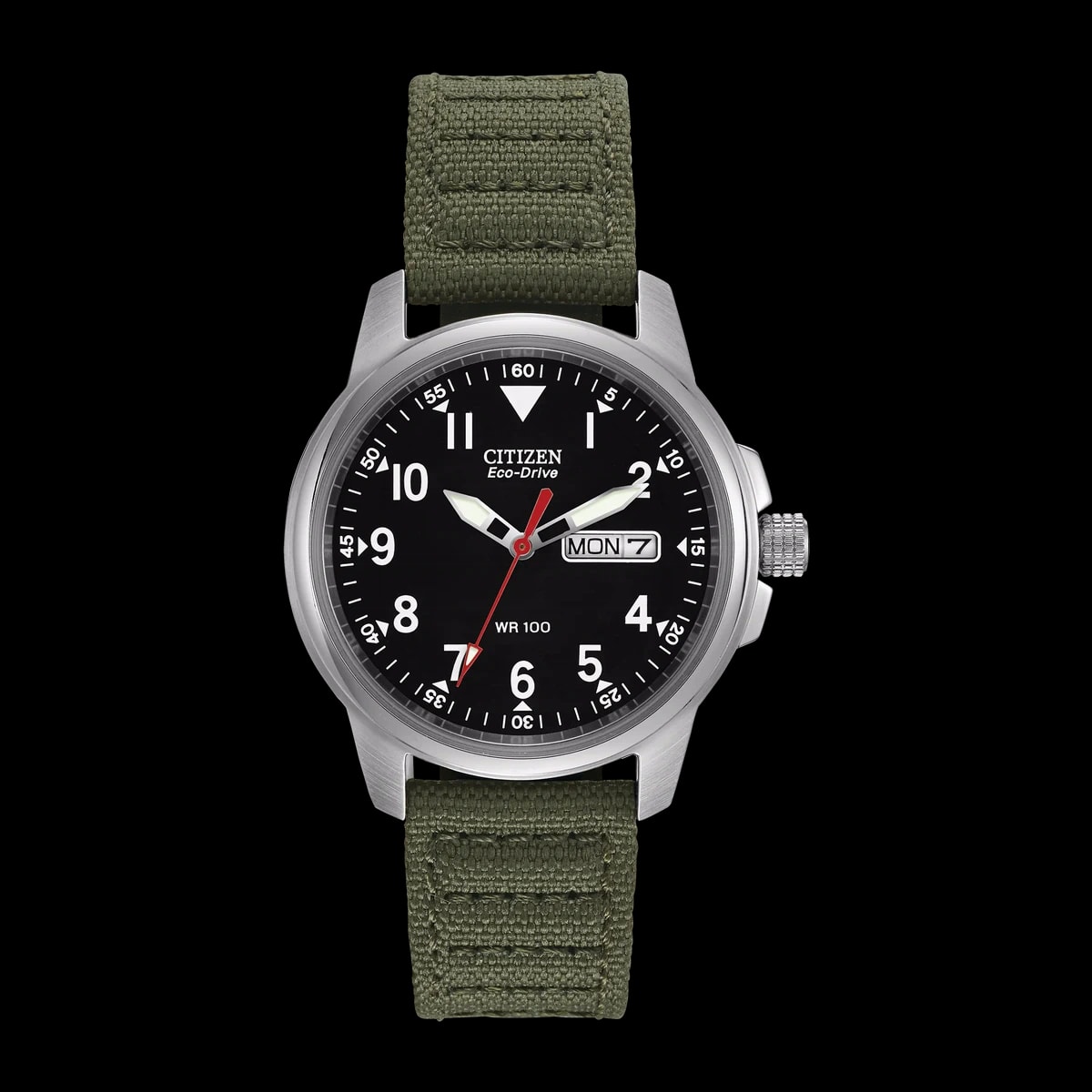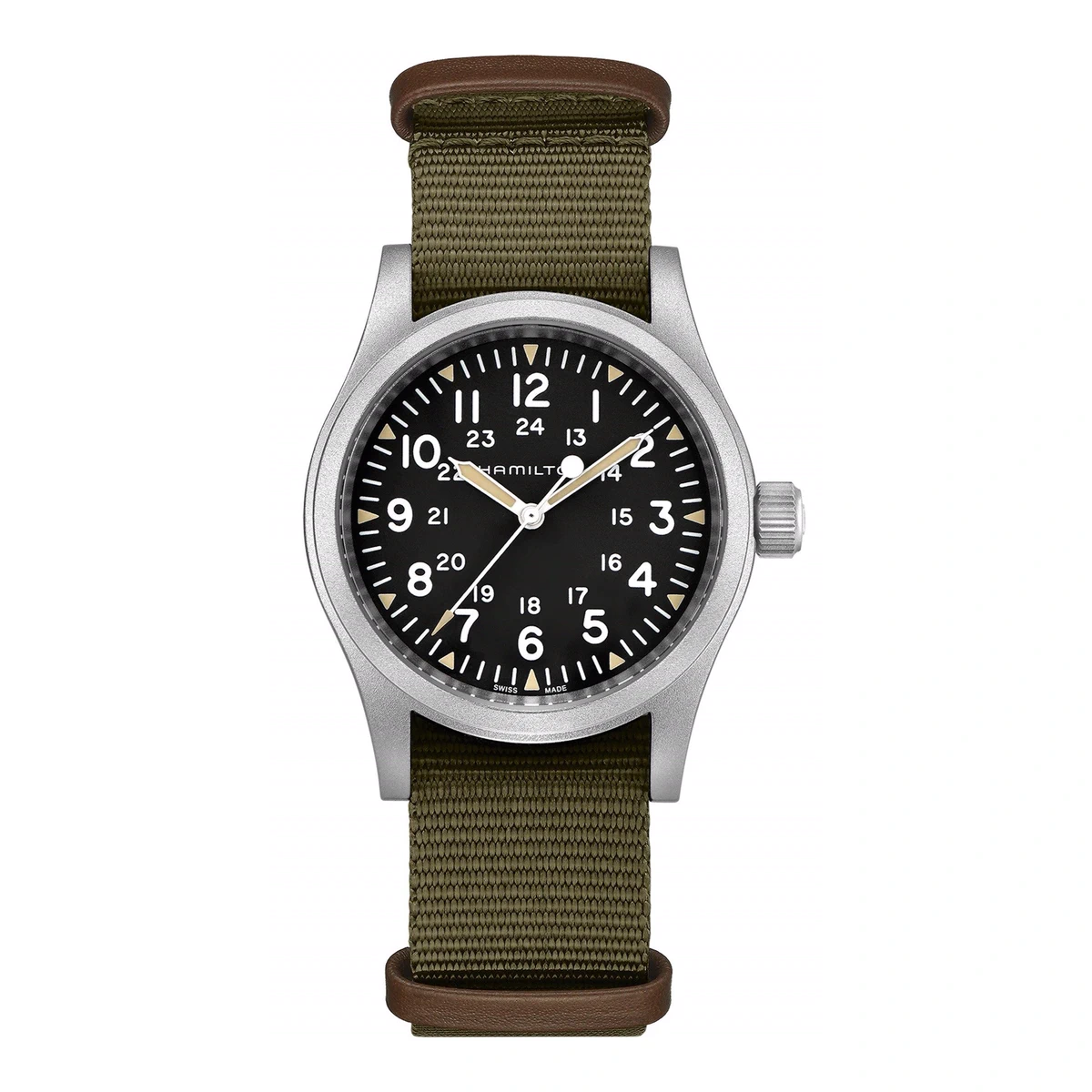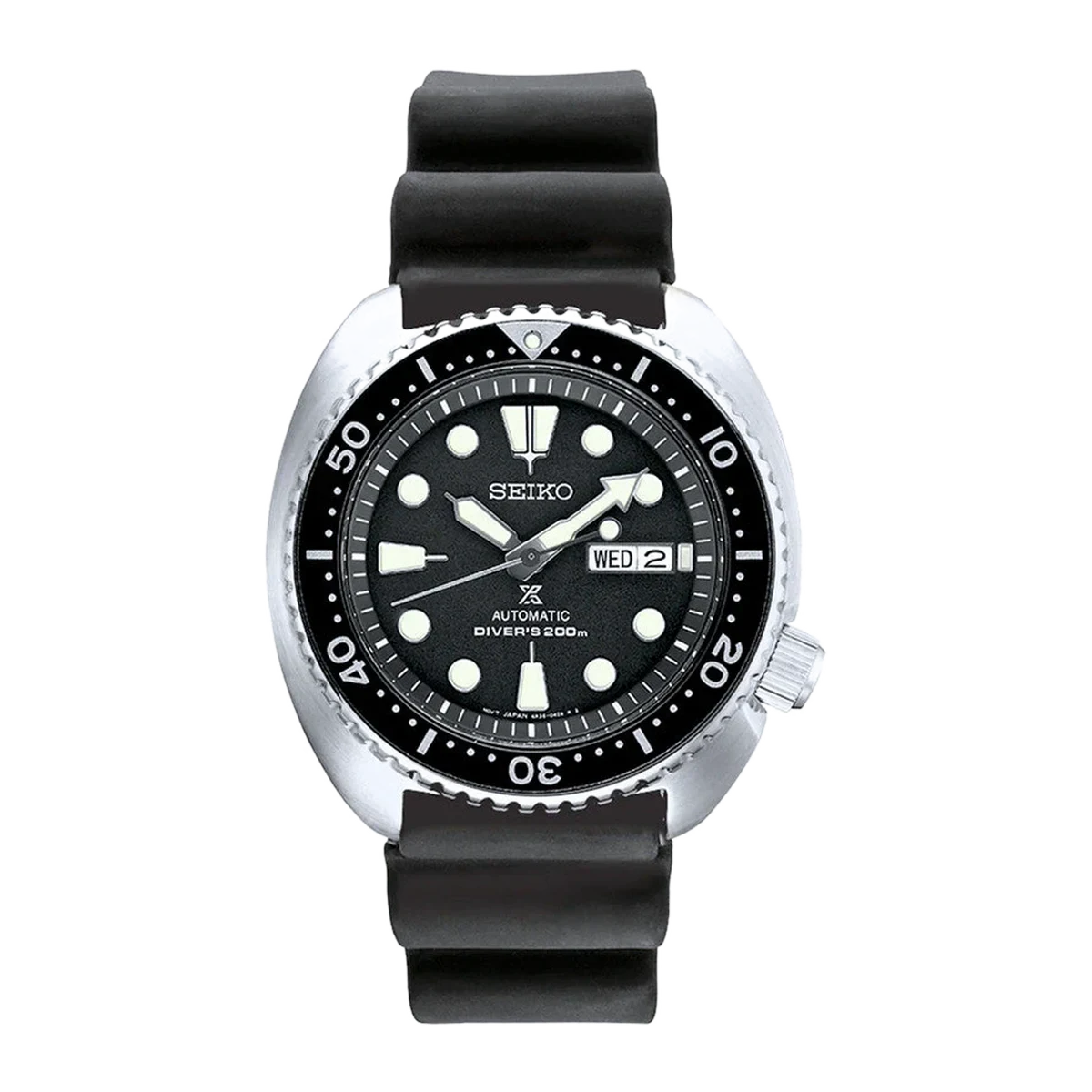
Measure your wrist first
Wrap a soft tape measure around your wrist just below the wrist bone, where a watch actually sits. Record the circumference in inches or centimetres. That single number determines everything that follows.
- Small: under 6.5 in / 16.5 cm
- Medium: 6.5–7.25 in / 16.5–18.5 cm
- Large: over 7.25 in / 18.5 cm
Why lug-to-lug is the number that matters
Lug-to-lug is the distance from the tip of the upper lugs to the tip of the lower lugs — the total length of the watch along your arm. Your wrist has a flat top and then curves away sharply on both sides. If lug-to-lug exceeds that flat span, the lugs overhang and the watch sits badly regardless of its diameter.
As a working rule:
- Under 6.5 in wrist: up to 46 mm lug-to-lug
- 6.5–7.25 in wrist: 43–50 mm
- Over 7.25 in wrist: 46 mm and up
This is why a Seiko Turtle at 45 mm across fits a 6.75-inch wrist and a 40 mm dress watch with long lugs sometimes does not.
Case height is a separate problem
Thickness has almost nothing to do with whether a watch fits your wrist and everything to do with whether it fits under a shirt cuff and how top-heavy it feels.
Under 11 mm slides under any cuff. Between 11 and 13 mm is normal for a sports watch and will catch occasionally. Above 13 mm — most 200 m divers — the watch is going over the cuff, not under it.
Remember to add the crystal. A domed or box crystal can add 1–2 mm to the effective height even when the specification does not count it.
What diameter actually controls
Case diameter determines visual presence — how large the watch looks in photographs and across a table. It also interacts with bezel width: a 40 mm watch with a thin bezel can show more dial than a 42 mm watch with a wide one.
Buy diameter for the look you want, and check lug-to-lug for the fit you need. They are separate decisions.