
Quick Answer
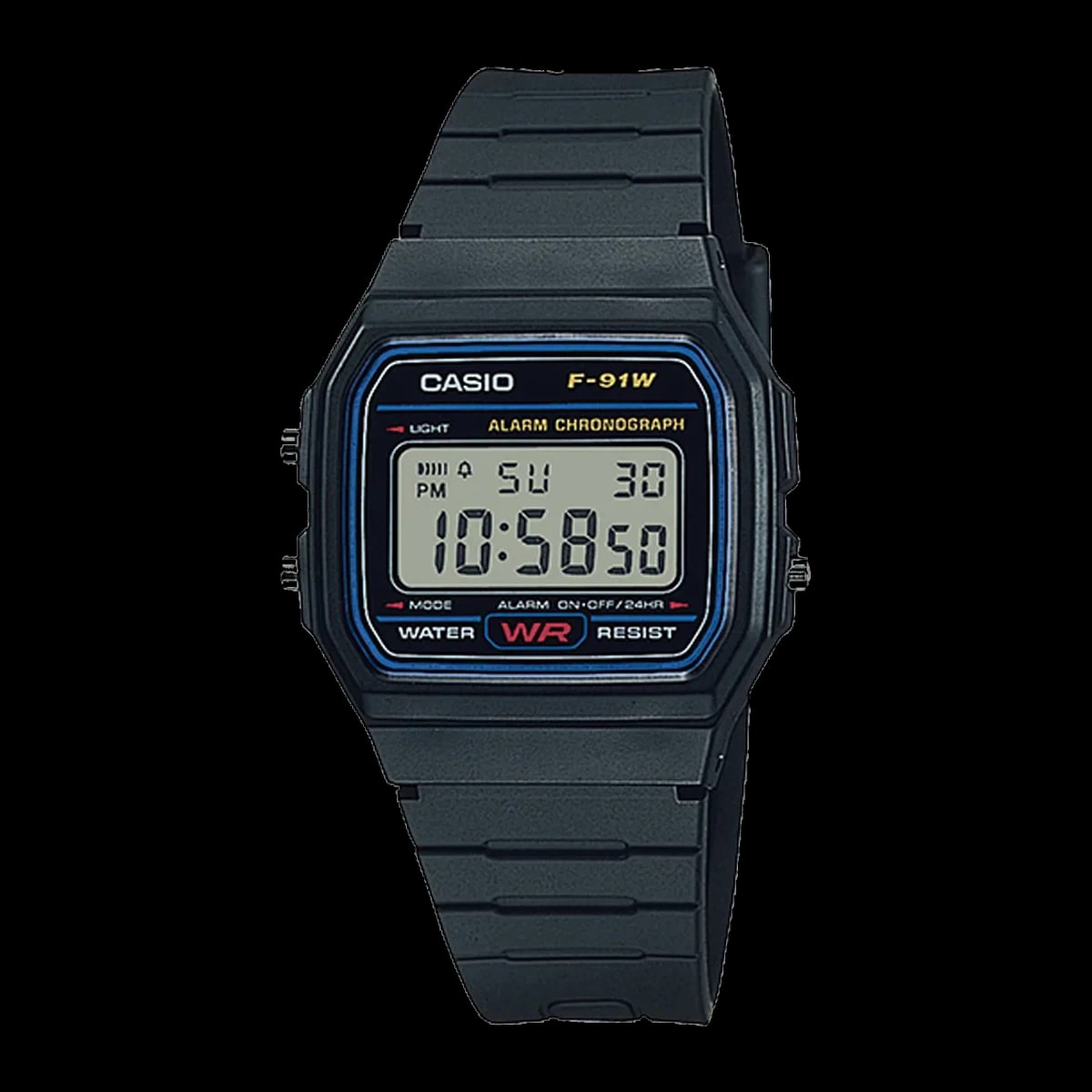
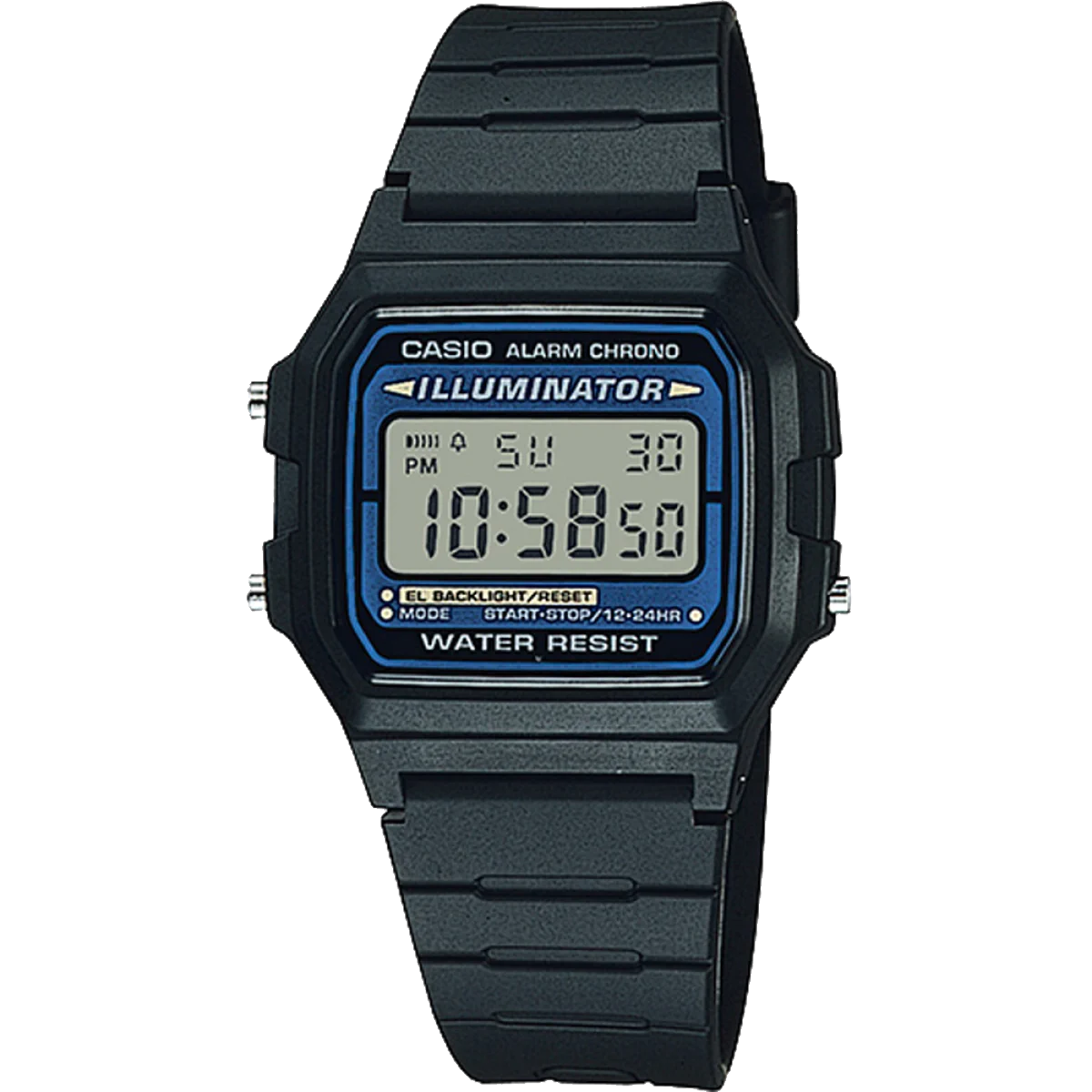
Same module, same ±30 seconds a month, same seven-year battery, same 21 grams, same $29.95. The F-91W lights one corner of its display with a small LED; the F-105W lights the whole display with an electro-luminescent panel and is 1.1 mm thicker for it. If you ever read the time in the dark, buy the F-105W.
There is no cheaper way to buy the same watch twice. Casio gives the F-91W and the F-105W the same digital quartz module, the same published accuracy, the same CR2016 rated at around seven years, the same resin case and resin glass, the same 21 grams and the same price. Even the water-resistance wording is identical — and identically vague. One thing separates them, and Casio prints its name on the dial of the second: ILLUMINATOR.
Specification Comparison
Casio F-91W
2 categories won
Casio F-105W
0 categories won
- Typical street price
- $30Even
- $30Even
- Movement type
- Quartz
- Quartz
- Caliber
- Not published
- Not published
- Power reserve
- Battery, approximately 7 years on a CR2016 (Casio specification)
- Battery, approximately 7 years on a CR2016 (Casio specification)
- Stated accuracy
- ±30 seconds per month (Casio specification)
- ±30 seconds per month (Casio specification)
- Case width
- 35.2 mm
- 35.4 mm
- Case thickness
- 8.5 mmWinner
- 9.6 mm
- Lug-to-lug
- 38.2 mmWinner
- 39 mm
- Crystal
- Resin glass
- Resin glass
- Water resistance
- Water Resistant (Casio publishes no depth rating)
- Water Resistant (Casio publishes no depth rating)
- Bracelet / strap
- Resin strap
- Resin strap
- Weight
- 21 gEven
- 21 gEven
- Style
- Digital · Everyday
- Digital · Everyday
- Recommended wrist
- Small · Medium
- Small · Medium
- Selection Score
- Not published
- Not published
Selection Time Verdict
Choose the Casio F-91W
Choose the F-91W if the watch lives in daylight. At 8.5 mm it is 1.1 mm thinner and 0.8 mm shorter end to end, and on a watch this light those millimetres are the whole difference in how it disappears under a sleeve. The LED is dim and covers one corner of the display, which matters not at all if you never use it — and this is the shape that has not changed since 1989, which is its own argument.
Read the full reviewChoose the Casio F-105W
Choose the F-105W if you read the time in the dark. The electro-luminescent panel glows blue-green behind the entire display instead of bleeding in from one edge, and it is the one thing the F-91W genuinely gets wrong. Casio specifies the same 21 grams despite the slightly larger case, so the light costs you 1.1 mm of thickness and nothing else — not weight, not battery life, not money.
Read the full reviewAt the same price, the F-105W fixes the only real flaw of the most famous cheap watch ever made, and charges 1.1 mm for it. That is the whole comparison. What neither of them will do is swim. Casio publishes no depth rating for either — the case back says WATER RESIST and the specification sheet says nothing more, which covers rain and hand-washing and stops there. If you want a digital Casio you can take into water, that is a different watch. Buy the F-91W for the silhouette and the history. Buy the F-105W because it is the better one.
Selection Time is reader-supported. If you buy through a link on this page we may earn a commission. This never affects our scores or what we recommend.
Frequently Asked Questions
What does ILLUMINATOR on the F-105W actually mean?
It is Casio's name for an electro-luminescent backlight: a panel behind the whole LCD that glows when you press the button. The F-91W instead has a small LED at one edge that lights part of the display. Both are legible in daylight without any light at all.
Is either one waterproof?
No. Casio publishes no depth rating for the F-91W or the F-105W — only the words water resistant, which cover splashes and rain. Neither should be worn swimming, and no figure in metres exists for either because Casio does not state one.
Do they take the same battery?
Yes. Both run on a CR2016 that Casio rates at approximately seven years. Using the F-105W's backlight often will shorten that, but the interval is still measured in years.
Updated September 10, 2026